Begin with the Fragments | Artist-Led Visual Essay by Victoria Rose
Exploration No.1: Begin with the Fragments
I seek truth but I hide from it. I seek light but prefer the shadows.

My dissertation sits as a gateway. At one point it looked as though it would be the second one I didn’t finish but I managed to pull myself and it together to produce what has unexpectedly become the platform from which to launch Your Why. Properly.
Like every story, there’s more to it. And it starts in 2019.
By then, I had already committed to leaving the classroom “for good” but was content to merge wedding photography with supply teaching. By the summer of 2019, I was bored. Clearly, I hadn’t fully understood entrepreneurship and I’d somehow missed the memo that said I’d simply stepped from one treadmill onto another.
Summer 2019 marked the beginning of a whole different set of dreams, ones I thought I laid to rest in 2001 when I enrolled at The University of Glasgow to undertake a degree in English Language and Literature. I was seventeen and my only aim was to escape a 6th year of high school. I loved English but I wanted to go to art school. Or study journalism. And with mediocre Higher grades (an A and two Bs), I was a little stuck. I also decided in May that I was leaving school, art school applications were closed by then. Or, that’s what I was told. I found myself in the summer of 2019 - so after the supposed closing date - submitting a clearing application to Glasgow School of Art. No portfolio prep. No help and guidance. It was simply the impulsive thing that’s always served me well: I’m going to do X. And then I do and then it all works out.
I got in. I was told my portfolio was very "commercial" and it was re-stated a few times, did I know this art school? Like, hell yes. It’s what I want.
So, it started. I tried so hard to be a good student and socialise and participate and turn up and for a while I did. That first almost year, I was model student material. I did things on time. I actually did things. And then, it got to 2020. All that momentum I had dissipated. I never got it back.
Without dwelling on too much, a lot changed and by the time I started my dissertation in September 2022, I had put an offer in on a house - my first totally alone - and was preparing to move to Girvan, on Scotland’s South West Coast. The first few lines of my dissertation start with heartache and that was to be what the remainder of art school looked like for me. I battled a past that I knew I needed to be released from but found myself in a present that was baffling. I thought I was so ready to dive into something new. I was excited to find the “something better” I had clung onto when everything dissolved. The reality is that I threw myself into a tidal wave and it took me far longer than it should have to come back out because I couldn’t see how bleak it was. Rose tinted glasses were glued on. What utterly frustrates me is that I didn’t want so much of the work I was making to be tied to this experience. People go through divorce. There are far worse things to happen and ultimately, throughout it all, it felt like the right decision. I was finally getting the type of house I’d always dreamed about by a sea I’d forgotten I’d always wanted to live beside. I was in my final year at Glasgow School of Art, living the dream I thought would never come true - that’s a lie, I knew I would, I could feel it; I didn’t believe that it would. Things were tough but amongst it were things that were incredible, including what I’d started to learn about myself.
That’s where the work was born. I’d never felt so heartbroken - on two accounts; two very different experiences of it. I lost myself. Truly, genuinely. On the surface, I was doing well. Flaunt and Flourish at that point was flourishing, I was making new connections and I had this boundless, infectious energy. It was frenetic and unsustainable and when the crash happened it was completely internal, hidden. I was using something new to plaster over what needed to be healed but unable to face that, I started printing. The darkroom became an escape. Reading for the dissertation became an escape. As that year faded out, the light that had been eroding for over a year finally died.
The dissertation I was supposed to write. The work I was supposed to make. Nothing was coming together. I needed extensions for everything.I stopped attending. Money was getting tighter and tighter. And the already small world I’d confined myself to was shrinking.
That’s a little melodramatic because even within that there were some lightbulbs. I took on a shop and built a proper darkroom. I’d become a trustee on a local committee and was taking part in things. I’d made new friends and was speaking daily to some of my oldest ones.
Still, it was difficult to make the work and write the dissertation. It meant I had to take myself to a place I didn’t really want to. I could’ve made something else. Written about something else. I could have. But it wasn’t the work. A few years later I would come across Rick Rubin and understand why but then it felt like I was simply being petulant, self sabotaging to punish myself… for what I don’t know? Failing to make a marriage work? Believing I was ready to start something new? Allowing my business to collapse? Who knows. The thoughts we allow to circle are incredible.
When I finally sat down and faced it all - at the last possible moment - I produced something I had no idea would linger for so long, not the pain but the impression it left on me. I’d accidentally stumbled across the fragments of my life and I wanted to piece them back together but with full protection. I don’t want my life or my work to be defined by a breakup and I don’t want the rest of my life to freeze because I can’t pick up the pieces. It feels like there’s something to discover in identity, in the fragments of who I am. I seek truth but I hide from it. I seek light but prefer the shadows. While the fragments exist dispersed, it feels that my purpose is unattainable; the only way I can reconnect who I am with who I am becoming is to face and re-present those fragments.
And that is what you have here.
The beginning of an autobiographical work exploring how we exist in fragments, in micro-narratives that we choose to interweave, or not, in relationships, situations, events and happenings.
What I’d like to offer is a commentary on my dissertation to take account of where I am now and the direction I see things moving. Fundamentally, the dissertation is based around the photography of Sophie Calle but while writing I realised that when we study autobiography we’re looking for ourselves. We are creatures who weave between narratives and look for the similarities and differences. It’s how we feel seen. The more seen we feel, the more hooks we can grip onto and the easier it is to make connections. When we do that, we ground ourselves in the world.
One of the early tensions I experienced in making the work I’ll now call Fragments is in giving too much away. I explore this in light of the work of Calle in the dissertation but it’s something that I’ve found recurring over the last few weeks: how much of someone else’s story am I sharing while telling my own and how relevant is it to what I’m putting across? Lots of the texts which are appearing on my social media feeds are extracts from the last few years: snippets of old text messages (some of them from 2009), random sections from writings I did for classes last year and even writings that are based not on truth but on what I would like. There’s lots more material but I feel I’ve come to the end of what’s usable because it feels too close to someone else or that it could reveal too much about someone I’m connected to. That makes for an interesting observation though: I know what these writings are based on and when I read them, I’m taken back to the memories (actually, the ones written for the classes were written with extreme consideration and deliberation; I was taking myself back to write as honestly and deeply as possible.) My attachment to them is going to be more powerful than anyone else’s and I wonder if I’m too worried about what someone else picks up. It’s possible that certain memories I recount go completely unrecognised and while I fear I’m shining this huge beacon, actually it’s words which barely make an impression. Finding a balance between respect for others but integrity for the work is proving to be more challenging than I realised. If I omit too much, the work will fail to deliver at all. It is my story, not simply a story and therefore regardless of how fragmented, traces have to be recognisable, on some level.
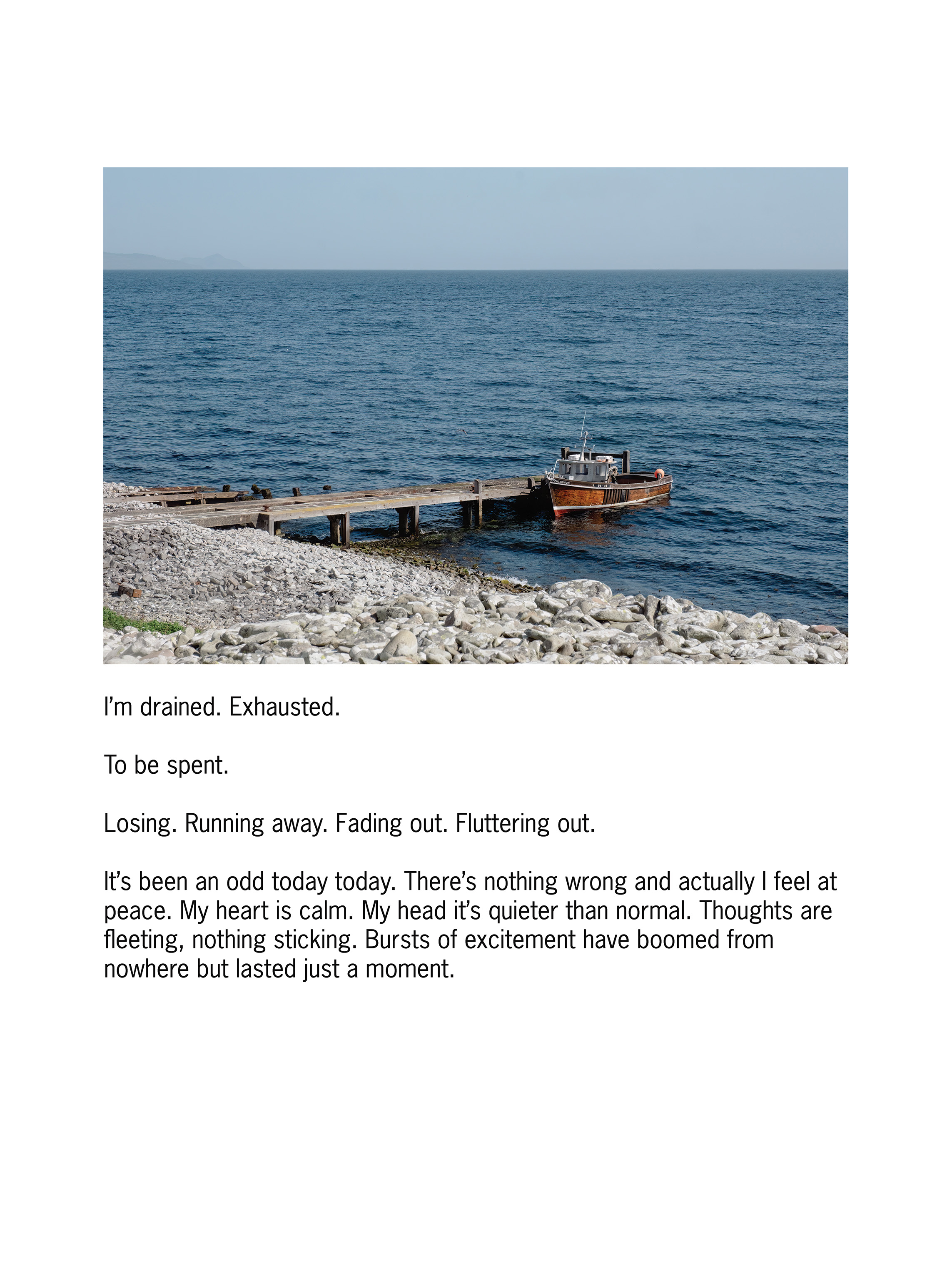
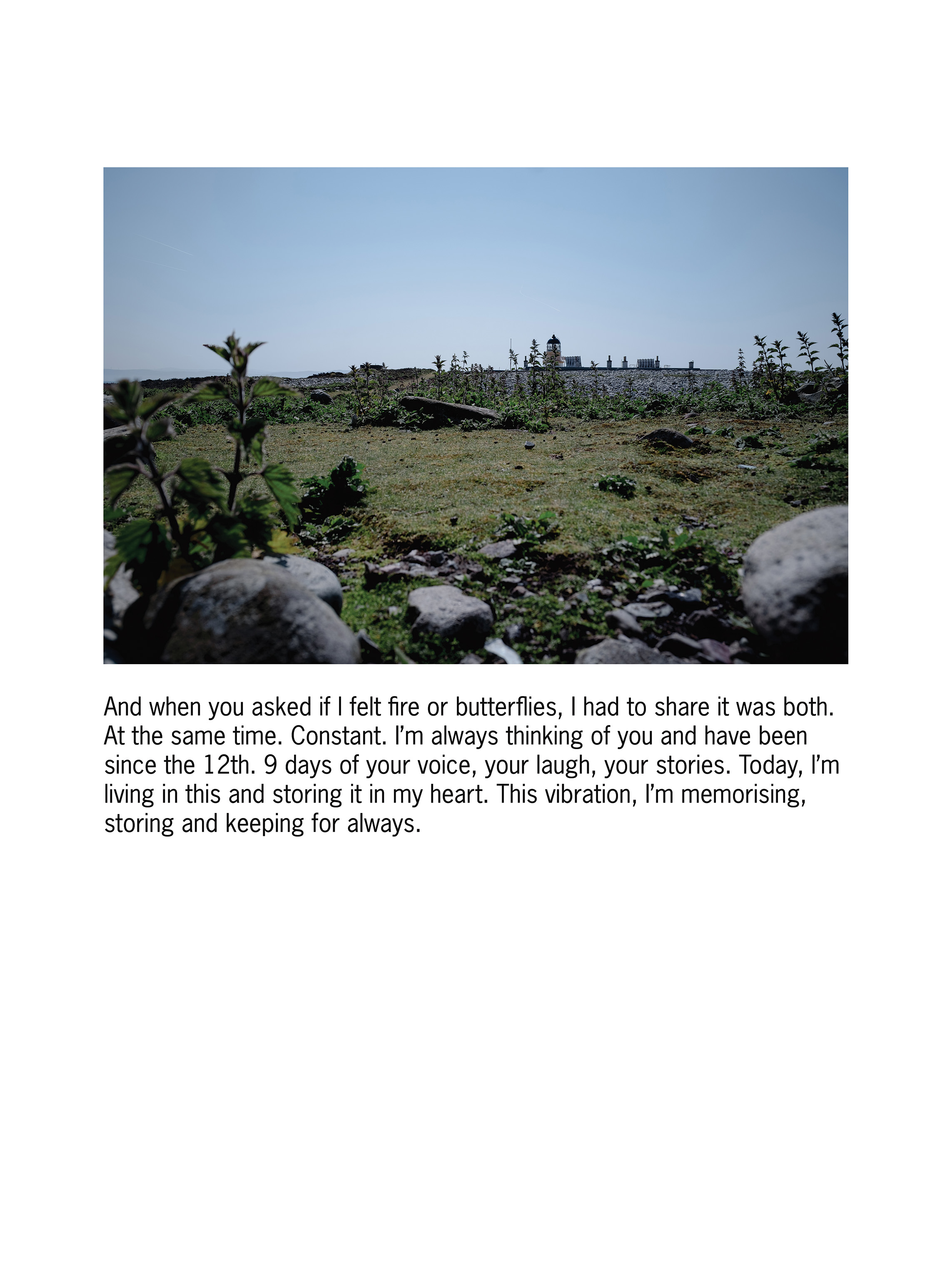
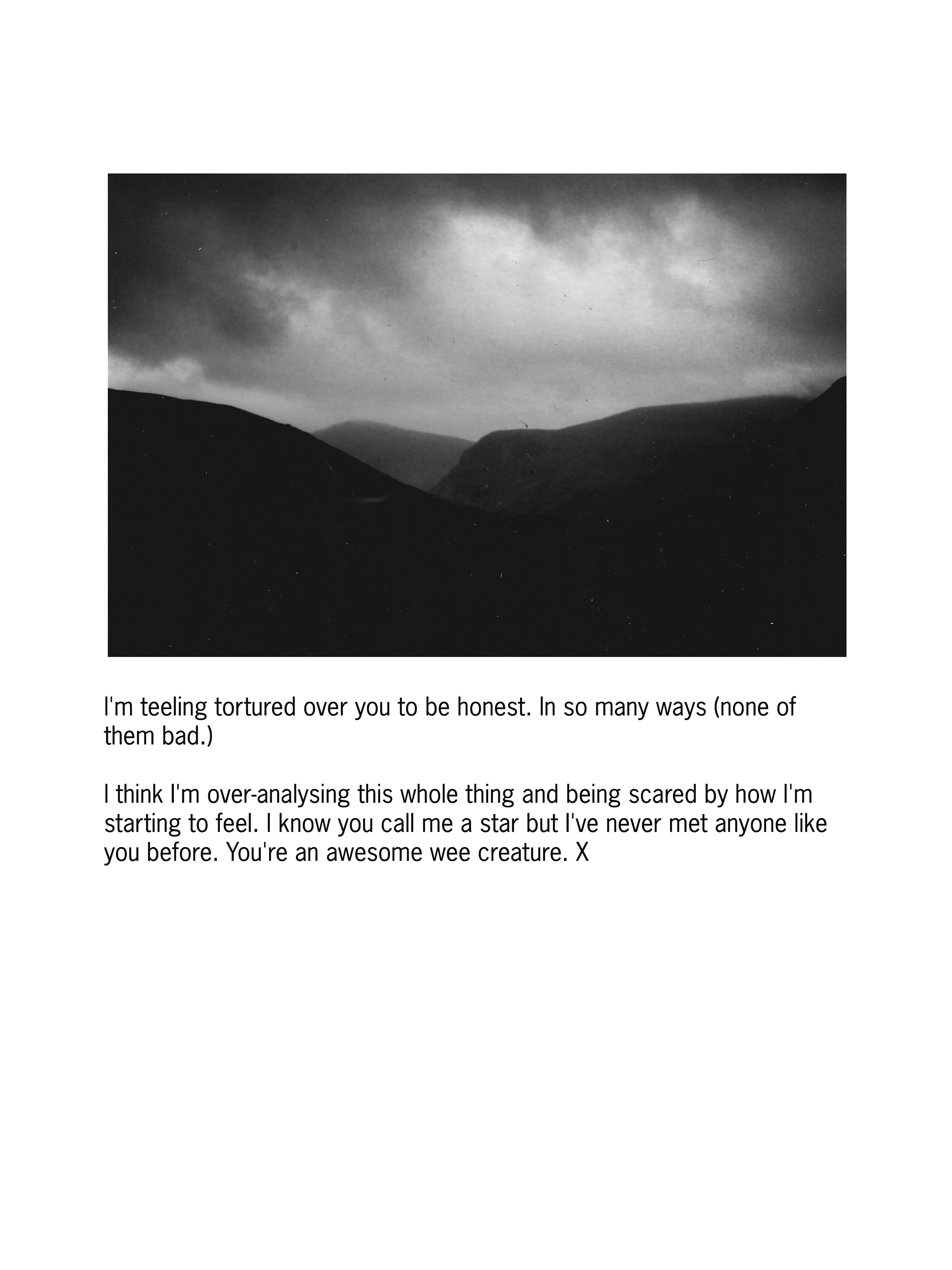
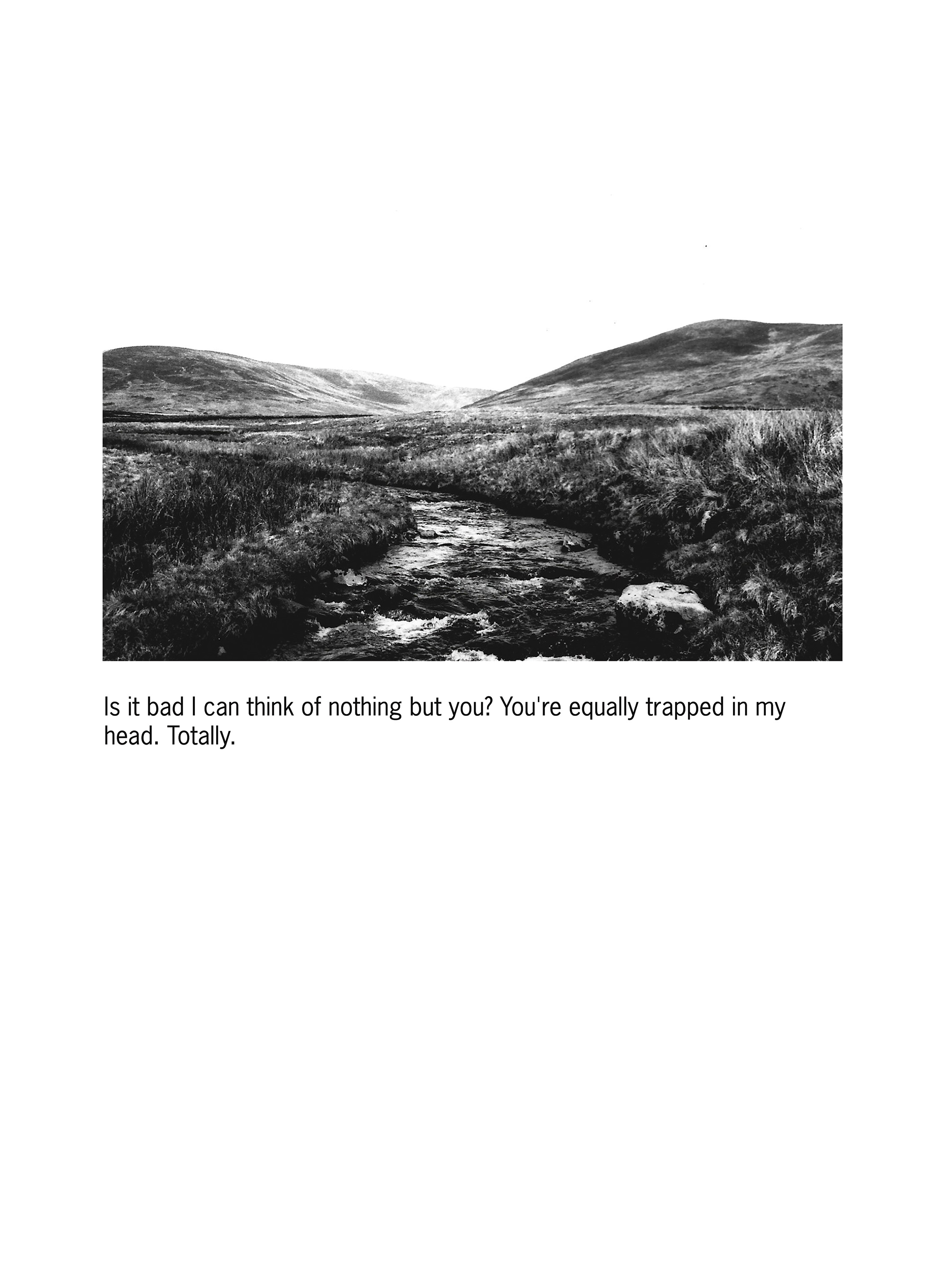
The other tension is in the evolution of the work. I discuss this a little in the dissertation when I speak of Calle’s self construction. I am making the work for and of myself and therefore I control and construct the narrative. What I leave out, I choose to omit. What I include, I choose to. How honest a portrayal of myself can I present? As someone who is generally hard on herself, I see me being swayed to focus too much on the negative aspects of my character, to downplay potentially even the things I see as strengths so as not to appear too - too what? Full of myself? Like I’m showing off? This is a rabbit hole and a half but one I need to be conscious of. With the work, what am I trying to do? Is it a particular aspect of my life I want to explore? Is it a generic thing? When I started again, it was to gain closure of the last six years. I went through a whole load of negatives and have different groups ready to be printed. When I started pulling things together from my digital files, I stuck to that same time period. That makes sense. This is where my photography has been and to date, I’ve made very few comprehensive works I’d describe as finished. Very few? None. Yet, the text extracts I’m drawn to are from last year. We’re in a completely different time period. There are few that have made it from the past but they were the snippets I earmarked in 2022 - they always belonged with the work. On top of this, there seems to be a natural categorisation of place: the Ailsa Craig, Spittle of Glenshee and Girvan and surrounding area. These feel like three separate works photographically, particularly the shots from the Ailsa Craig and the Spittle of Glenshee which are two distinct, curated bodies.
I can write memories of the past now but the interesting thing is that some of the extracts appearing do not represent past events, they’re present and that’s where I feel I’m running out. What is the relationship between the past and the present? It feels that both should be in the work to reflect a perpetual state of self construction. I like the idea of identity being a quest, the game is identity in action. With that in mind, would it be possible to make an autobiographical work without reference to the present? Is it simply a form of self-invention and if so, is that a bad thing? Do I have to break myself into “identities” and focus on lots of mini artworks which build a bigger whole? That feels contrived and yet it seems to better fit the definition I’m constructing around “fragments.” I am making a series of disjointed, interconnected artworks. I want the narrative to be fragmented and it seems important that there is no chronological arrangement. I desire to leave space for the viewer. While the story is mine, the narratives we seek in others mean that when we seek those similarities and differences, we also fill in the gaps, the information not shared which should reduce the tensions around revealing too much. Regardless of how much or how little is shared, an audience will insert their own reading and therefore meaning. Visual cues in the accompanying images will signpost and guide but for now even these are abstract in the work I’ve done to date where the image/ text selection has been random in all but one case. I am pairing based on how things ‘feel’ together but I haven’t yet analysed what those feelings are, nor why. At some point these may need exploration to assess whether or not what I’ve selected works better over something else. Moreover, deeper research is needed around the notions of referential autobiography. I introduced it as a very surface level term in the dissertation but I suspect it will be fundamental for addressing the core definition of what I mean by a fragment. Who are the fragments of myself in relation to? That may enable me to resolve some of the tensions I’ve raised here.
Ultimately, there is only one question: how do I want to be seen? I suspect that will change as the work develops but I’m not sure I have an answer at all and that feels like the most sensible place to start.
How do I want to be seen?
It feels like there’s something to discover in identity, in the fragments of who I am.
The Dissertation
The text above sits beside a longer written work:
This digital edition is available to download for £7.
Your purchase also unlocks access to the next Exploration in this series.
New works are released at least every quarter,
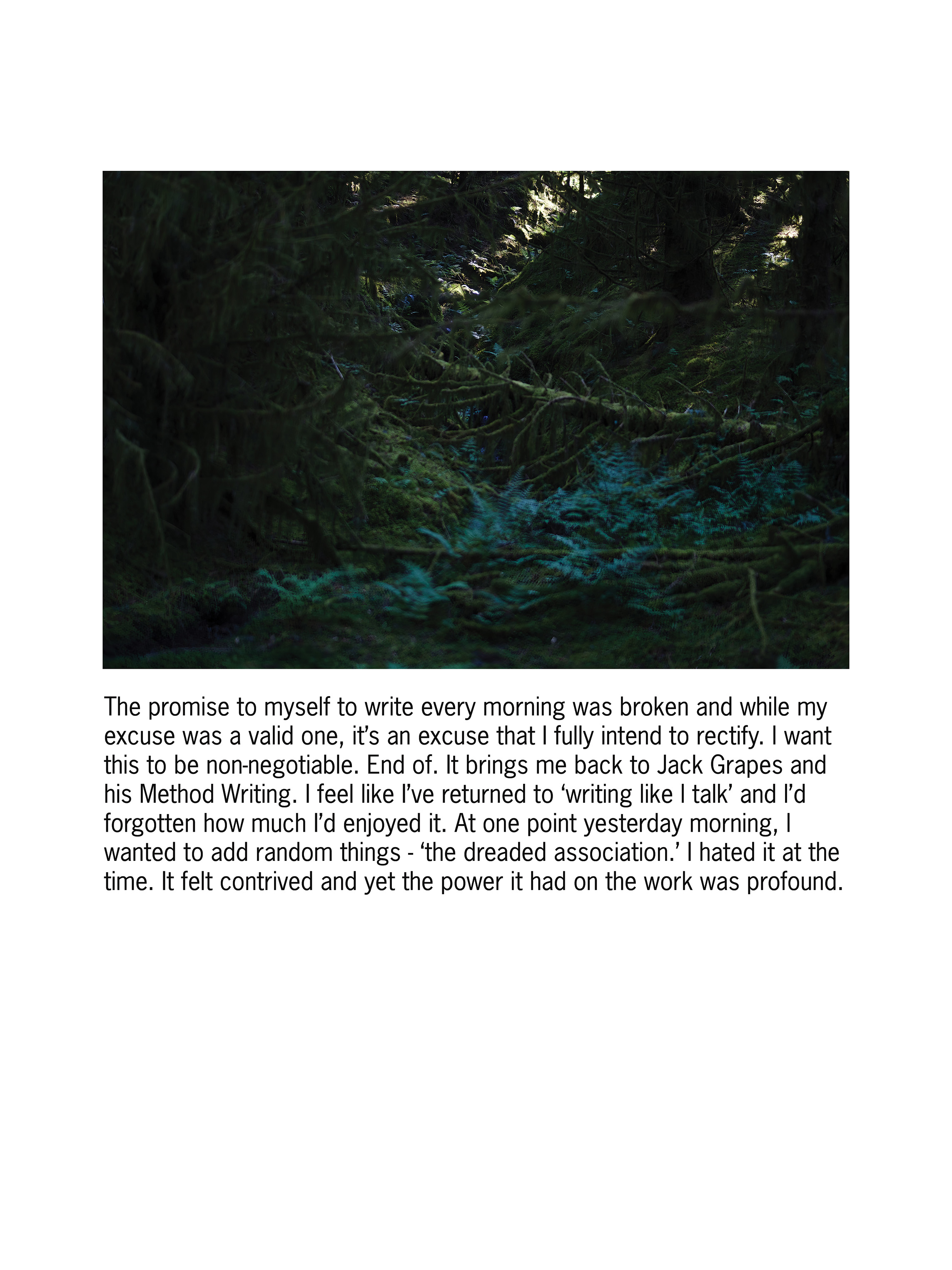
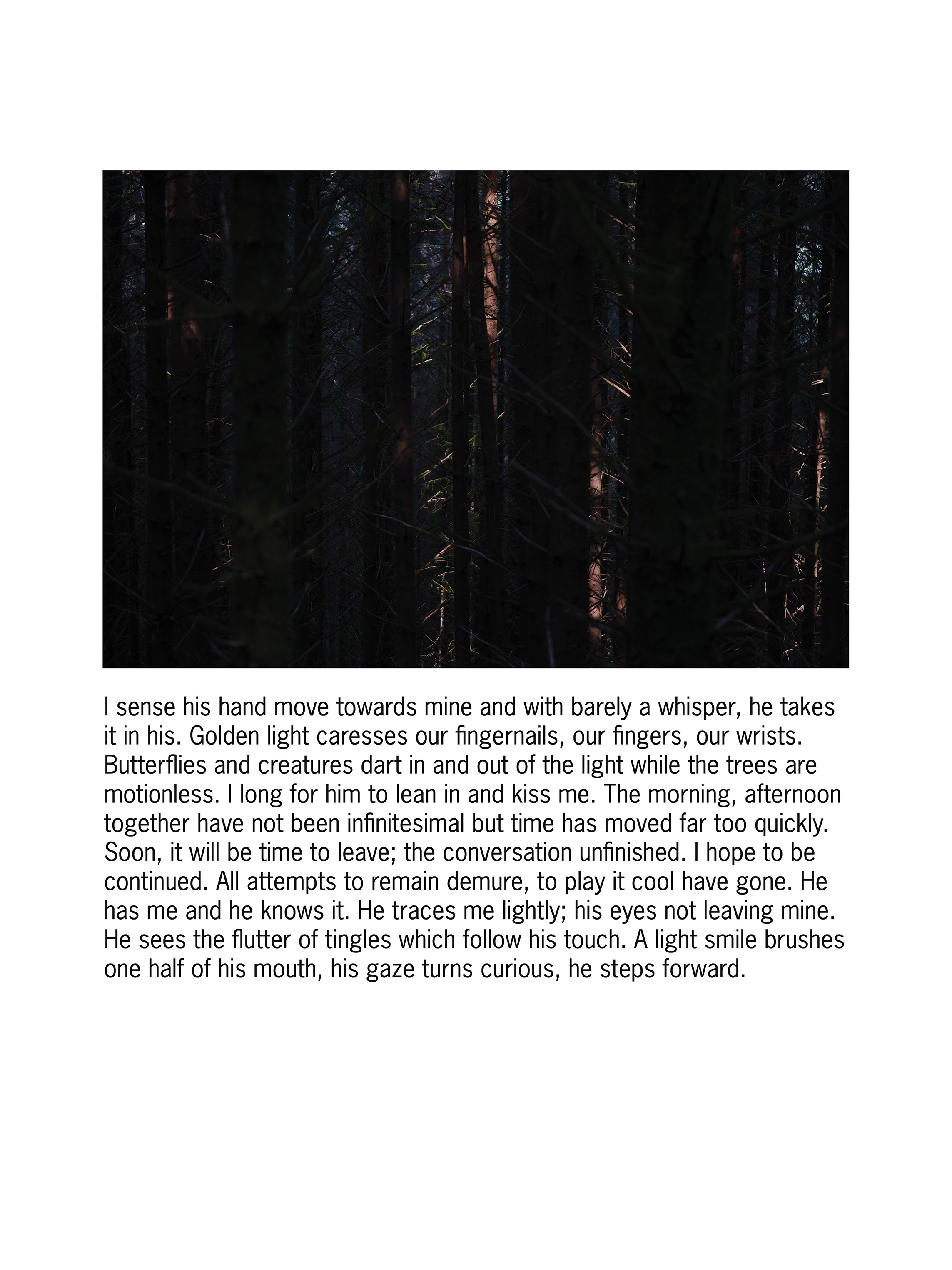
Ailsa Craig





Spittle of Glenshee



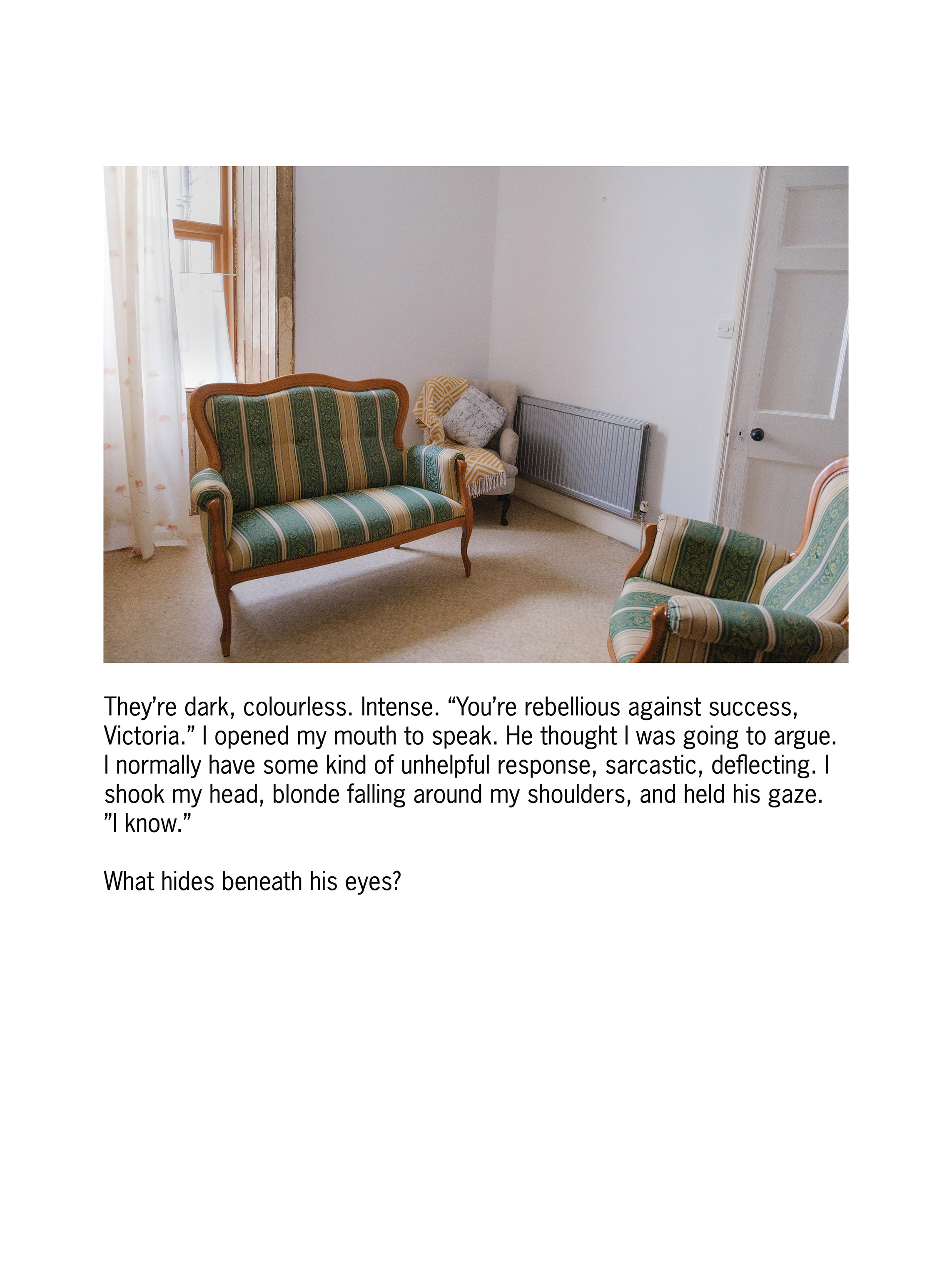
Home - Girvan



What’s Next
This is the first in a series of Explorations.
Each one fragments a larger question and is based on how my research for this project is shaping. The next is: how do I want to be seen?
Subscribe to Explorations here.


